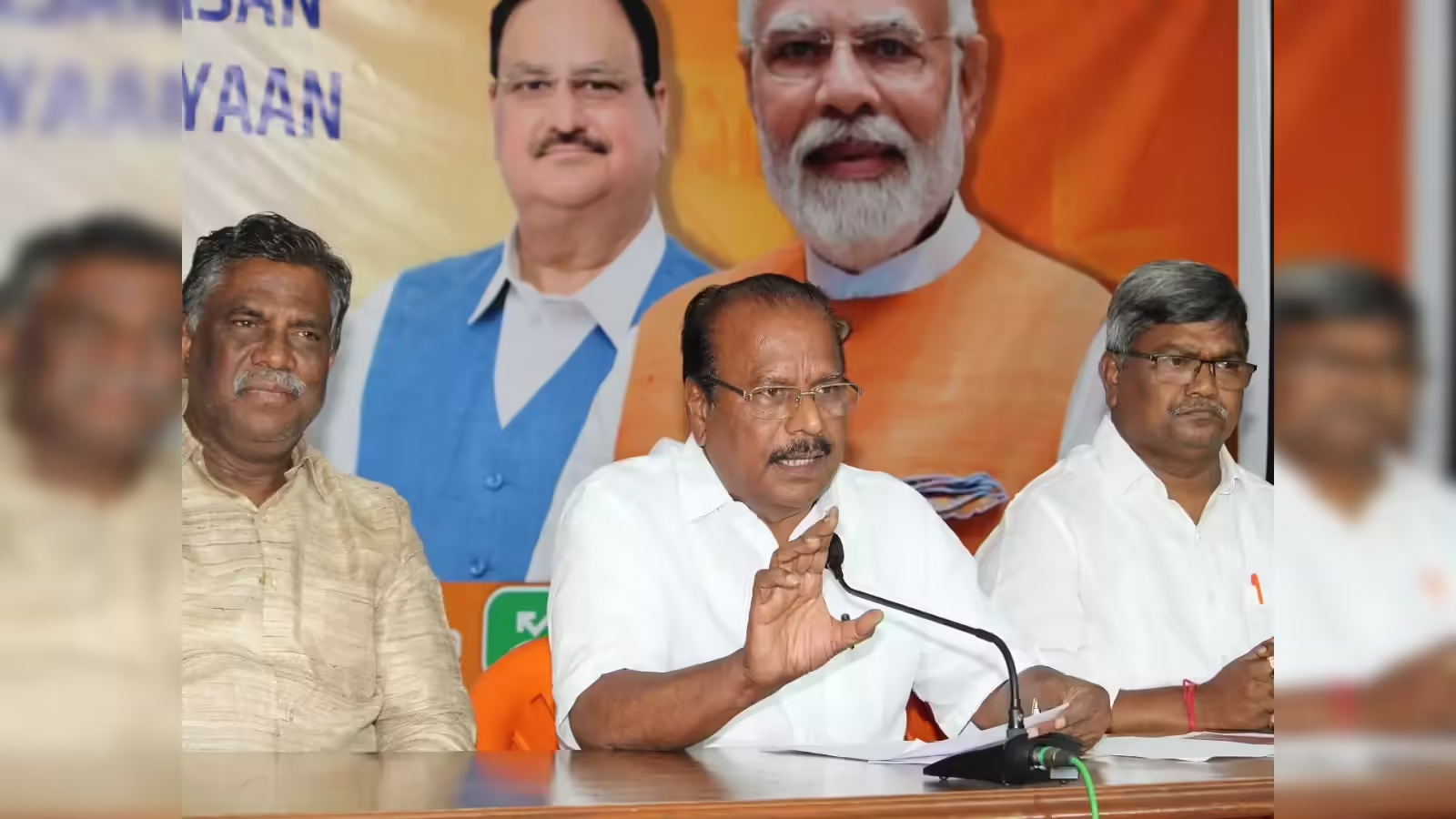
Governance initiatives, administrative contributions, and the policy-level thinking that has defined Nallu Indrasena Reddy's approach to public service — from constituency development to state-level governance.
The policy thinking of Nallu Indrasena Reddy is distinguished by a quality that is often absent in political discourse: the integration of theoretical understanding with practical implementation experience. Over four decades of public service — from the urban constituencies of Hyderabad to the national party secretariat to the Raj Bhavan in Agartala — he has developed a nuanced understanding of how policy intentions translate (or fail to translate) into ground-level outcomes.
This understanding is rooted in a fundamental insight: that good policy is necessary but not sufficient for good governance. The gap between policy formulation and policy implementation is where most governance failures occur, and bridging this gap requires not only technical competence but also political will, institutional capacity, and a deep understanding of the communities that policies are designed to serve. Throughout his career, Indrasena Reddy has worked to address each of these elements.
His policy approach can be characterized by three core principles. First, evidence-informed decision-making: while remaining sensitive to political realities, he has consistently advocated for policies grounded in empirical understanding rather than ideological prescription alone. Second, stakeholder engagement: his approach to policy development emphasizes broad consultation and the inclusion of diverse perspectives, particularly those of communities most directly affected by policy outcomes. Third, adaptive implementation: recognizing that rigid policy frameworks often fail when confronted with complex local realities, he favors approaches that allow for flexibility and learning during the implementation process.
As Governor of Tripura, Nallu Indrasena Reddy has used the platform of the Raj Bhavan to advance several governance priorities. While the Governor's role is primarily constitutional rather than executive, the office provides significant convening power and moral authority that can be directed toward developmental objectives.
His governance initiatives in Tripura have focused on several key areas. Education and human capital development have been central priorities, reflecting his belief that sustainable development begins with investing in people. He has actively engaged with the state's universities in his capacity as Chancellor, promoting quality improvement initiatives, research collaboration, and the integration of vocational training with traditional academic curricula.
Tribal welfare and cultural preservation represent another major focus area. In a state where tribal communities constitute approximately one-third of the population, the Governor's constitutional role as a guardian of tribal interests carries special significance. Indrasena Reddy has used this role to spotlight issues of tribal land rights, cultural heritage preservation, and the equitable distribution of developmental benefits among all communities in the state.
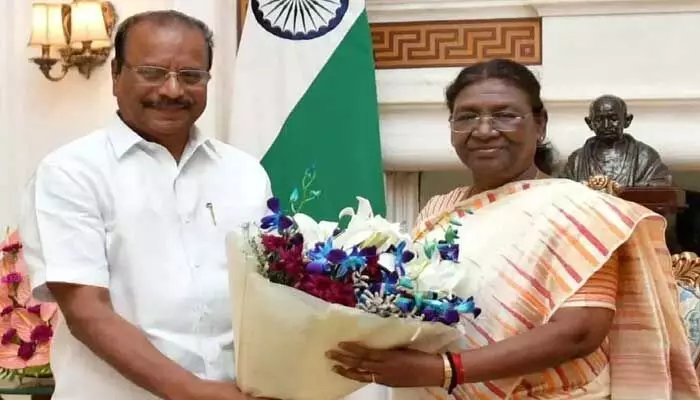
The breadth of Nallu Indrasena Reddy's policy engagement spans multiple domains of governance, reflecting a holistic understanding of the interconnected challenges facing Indian states.
As Chancellor of Tripura's state universities, he has prioritized academic governance reform, faculty development, and the alignment of higher education with the state's developmental needs. His approach emphasizes the university's role not merely as an academic institution but as an engine of social transformation and economic development. Initiatives include strengthening research capacity, promoting interdisciplinary studies, and improving student outcomes through mentorship and skills development programmes.
Tripura's rich biodiversity and forest cover represent both an ecological treasure and a governance responsibility. Through the Raj Bhavan's convening power, he has championed initiatives that balance conservation with sustainable development. His environmental advocacy encompasses forest protection, sustainable agriculture promotion, and the integration of traditional ecological knowledge of tribal communities into modern conservation frameworks — an approach that recognises indigenous communities as partners in environmental stewardship.
For a landlocked state with limited connectivity to the Indian mainland, infrastructure development is existential rather than merely developmental. The Governor has been an active advocate for enhanced road, rail, and air connectivity for Tripura, recognizing that the state's economic potential cannot be realized without robust transportation links. His advocacy extends to digital connectivity, viewing broadband infrastructure as essential for bridging the information divide between northeastern India and the rest of the country.
Drawing on his grassroots political experience, he has championed welfare programmes that reach the most marginalized communities in Tripura. His approach to welfare is not paternalistic but empowering — focusing on creating conditions for self-reliance rather than dependency. This includes supporting women's self-help groups, promoting tribal handicrafts through market access initiatives, and advocating for healthcare infrastructure improvement in remote areas of the state.
The Raj Bhavan under his leadership has become an active patron of Tripura's cultural heritage. From hosting cultural festivals that showcase tribal performing arts to supporting documentation projects for endangered languages and art forms, the Governor's engagement with cultural preservation reflects a understanding that cultural identity is inseparable from governance and social well-being. His cultural advocacy draws connections between Tripura's heritage and Telangana's own rich cultural traditions.
Recognizing that Tripura's future lies in its young population, the Governor has made youth empowerment a central theme of his tenure. This includes supporting skill development initiatives, promoting entrepreneurship among young people, facilitating educational exchanges, and creating platforms for young people to engage with governance processes. His youth engagement strategy reflects a belief that investing in young people is both a moral imperative and the most effective strategy for sustainable development.
At the heart of Nallu Indrasena Reddy's approach to policy and governance lies a conviction that public office is fundamentally an act of service. This conviction — shaped by decades of direct engagement with the people he has served — distinguishes his approach from purely technocratic or ideological models of governance.
His policy thinking reflects what might be called "compassionate pragmatism" — an approach that begins with empathy for the lived experiences of citizens, translates that empathy into policy priorities, and then pursues those priorities with the strategic discipline and institutional rigor that effective governance demands. This approach does not sacrifice efficiency for compassion or compassion for efficiency; instead, it recognizes that truly effective governance must incorporate both dimensions.
The impact of this approach is visible in the way he has engaged with Tripura's governance challenges. Rather than imposing external models or one-size-fits-all solutions, his policy engagement begins with listening — understanding the specific needs, capabilities, and aspirations of the communities involved — and then works collaboratively to develop responses that are both effective and contextually appropriate.